
Most of us grow up thinking about health in terms of disease: you’re either sick or you’re well. But health and disease aren’t separate states — they exist on a continuum. Understanding that continuum is one of the most empowering things you can learn about your own body.
Symptoms Are Communication
When a warning light appears on your car’s dashboard, you don’t remove the light — you look under the hood. Symptoms work the same way. Fatigue, headaches, skin problems, digestive issues — these are not the disease. They are your body’s way of telling you something needs attention.
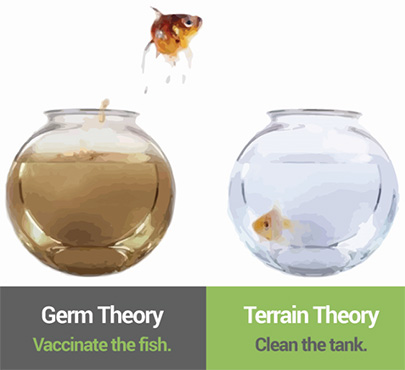
The conventional approach often focuses on suppressing symptoms. The natural health approach asks: what is causing this? And more importantly: what conditions does my body need in order to resolve it?
The Health/Disease Continuum
Health doesn’t collapse overnight. It declines through a predictable series of stages — and at every stage, the process can be slowed, stopped, or reversed by changing the conditions:
- Excellent Health — The body is well-nourished, well-rested, and efficiently eliminating waste.
- Enervation — Energy reserves begin to drop. The body’s ability to eliminate waste slows down. This often results from chronic stress, inadequate rest, or poor nutrition.
- Cellular Irritation — Retained waste begins to irritate tissues. You may not feel symptoms yet, but the process has started.
- Inflammation — The body mounts an active response to the irritation. This is where most people first notice something is wrong — pain, swelling, redness, heat.
- Ulceration — Tissue begins to break down. The body may create openings to expel accumulated toxins.
- Tissue Hardening (Fibrosis) — The body walls off damaged areas with scar tissue as a protective measure.
- Abnormal Growths — Chronic conditions may lead to the formation of tumors or other tissue changes.
- Terminal Disease — The final stage, where organ systems can no longer compensate.
The important insight is this: the earlier you intervene, the simpler the intervention. At stage 2, an extra hour of sleep may be all you need. By stage 5, the body requires much more support. The goal is always to move back toward stage 1 — and the body will do that naturally when given the right conditions.
What the Body Needs
The raw materials for healing are remarkably simple:
- Superior nutrition — whole, unprocessed, nutrient-dense foods
- Clean water — adequate hydration throughout the day
- Fresh air and sunshine
- Adequate rest — the body heals most efficiently during sleep
- Peace of mind — chronic stress consumes the energy the body needs for repair
- Waste removal — the body must be able to eliminate what it doesn’t need
Energy and Healing
Your body runs on energy, and that energy is finite. Every process — digestion, movement, thinking, immune function — draws from the same pool. Of all these processes, digestion is the single greatest energy consumer.
This is why rest and simplified eating are so important during illness. When the body isn’t spending energy digesting heavy meals, it can redirect that energy toward healing. This principle — conserving energy for repair — is one of the oldest insights in natural health.
Building Health Intentionally
The goal is not to wait for disease and then fight it. The goal is to build health so deliberately that disease has less opportunity to develop. This means paying attention to nutrition, hydration, rest, elimination, and emotional well-being — not perfectly, but consistently and with understanding.
If we are not intentionally building good health, we are unintentionally creating poor health. The choice is always available.
Continue learning: Gut Health & Candida · Nutrition & Whole Foods · Book a consultation